Episode 15
How to deal with Emotions [Ep 15]
This week, we are diving into the essential skill of emotional awareness and healthy coping strategies. Join me as we explore practical steps to identify, understand, and respond to our emotions in healthier ways. Discover how tuning into our feelings can enhance emotional awareness, reduce stress, and cultivate resilience. Learn valuable insights and actionable tips to navigate life's challenges with intention and authenticity. Tune in to empower yourself with the tools to thrive beyond anxiety through emotional well-being.
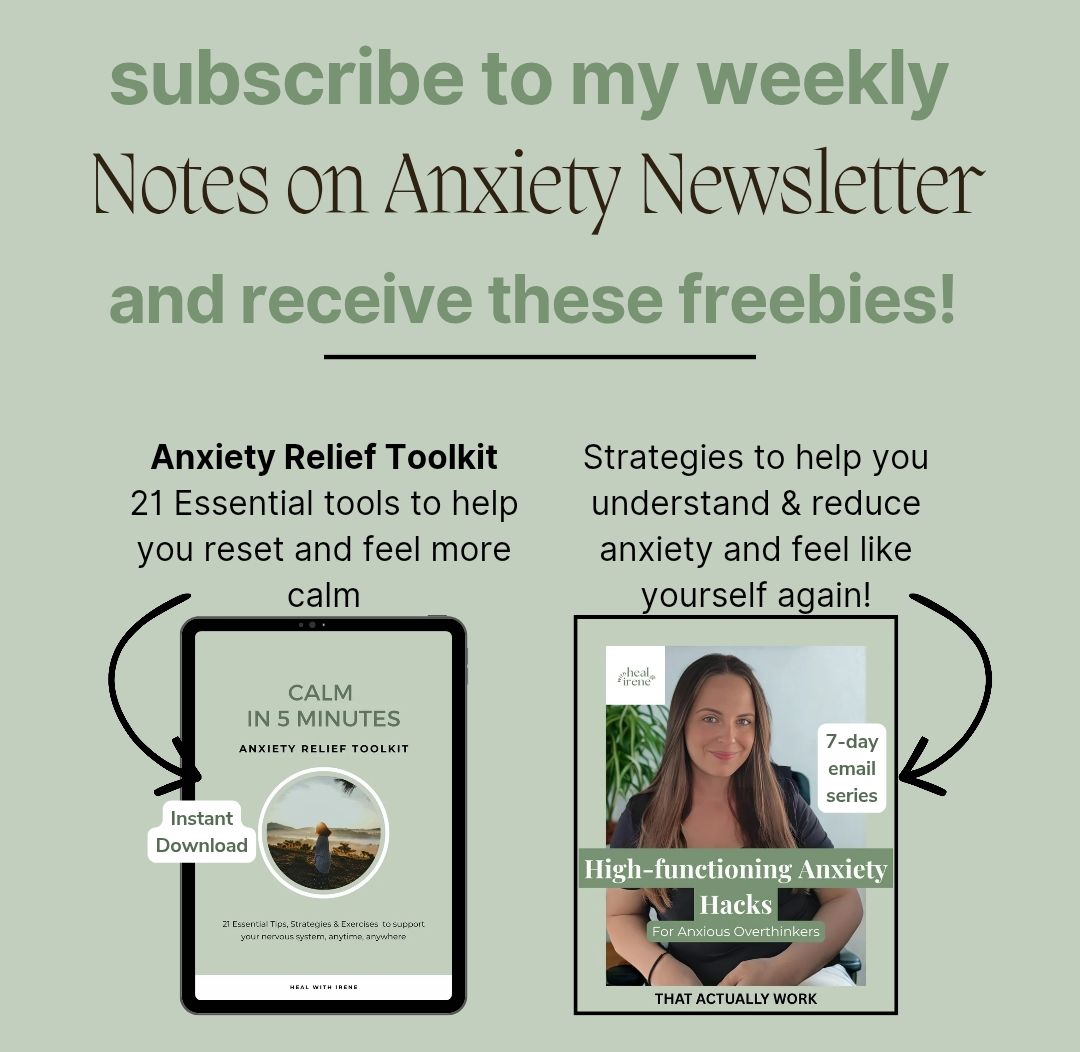
- FREE High-functioning Anxiety Survival Guide
- Check out the High-functioning Anxiety Blueprint
- Ask me your anxiety-related questions for a future episode.
- 1:1 Reset & Reclaim Hypnotherapy Program. A 4-week journey to help you gently break down the Eldest Daughter conditioning that’s been running your life, and reclaim your voice, your needs, and your sense of self.
- Subscribe and Leave a Review
DISCLAIMER: All content here is for informational purposes only. This content does not replace the professional judgment of your own mental health provider. Please consult a licensed mental health professional for all individual questions and issues.
Transcript
You're listening to the Peace With Anxiety Podcast.
Speaker A:I am your host Irene Evangelo, anxiety counselor and clinical hypnotherapist.
Speaker A:I'll be coming to you every week to share actionable tips, simple strategies and useful resources to help you break free from high function anxiety.
Speaker A:We'll be covering how to recognize and understand your anxiety, strategies to change your thoughts and feelings, and ways to implement long lasting change.
Speaker A:If you are trying to overcome people pleasing behaviors, navigate anxiety, living in self doubt or something else keeping you stuck,
Speaker B:then you are in the right place.
Speaker A:I know that you are ready to get to the next level of your life feeling free, calm, confident and in control.
Speaker A:So let's get started.
Speaker B:Hello everyone and welcome Back to episode 15 of the Peace with Anxiety Podcast where we dive deep into topics that empower you to thrive beyond anxiety and Today we are exploring a fundamental aspect of our human experience.
Speaker B:Our emotions and emotions are like the vibrant colors that paint our lives, influencing our thoughts, our actions and our relationships.
Speaker B:However, many of us are struggling to truly understand its patterns or purpose.
Speaker B:And think about it.
Speaker B:If you're driving a car and suddenly a warning light blinks on the dashboard, what do you do?
Speaker B:Do you just ignore it or cover it up?
Speaker B:No, you acknowledge it as a signal that something needs attention under the hood.
Speaker B:And our emotions are like those dashboard lights.
Speaker B:They are messages from within, asking us to pay attention and take action.
Speaker B:And when we suppress or ignore our emotions, they do not just simply disappear.
Speaker B:Instead, they can manifest in subtle ways through stress, tension, headaches, or even affecting our relationships.
Speaker B:So why does emotional awareness matter?
Speaker B:It's not just about feeling good, it's about living well.
Speaker B:Research has shown that those who are emotionally aware tend to have healthier relationships because by recognizing our own emotions, we become better attuned to the feelings of others.
Speaker B:It also empowers us to make better conscious choices because instead of reacting impulsively to emotions, we can respond thoughtfully, considering the broader impact of our actions.
Speaker B:And of course, emotional awareness allows us to navigate life's challenges more gracefully.
Speaker B:Because when we identify and name our feelings, whether it's joy, anger, sadness or fear, we gain clarity and insight into our inner world and we are better able to take care of ourselves.
Speaker B:So that's today's topic.
Speaker B:We will explore five practical steps to identify, understand and respond to our emotions in a healthy way to increase emotional awareness and cultivate healthier responses to our feelings.
Speaker B:Because when we tune into our emotions, we gain invaluable insights into ourselves, reduce stress, and improve our well being.
Speaker B:So here are the five steps that we're going to cover today.
Speaker B:Step one Emotional identification Step two Understanding triggers.
Speaker B:Step three Thoughtful response.
Speaker B:Step four Cognitive reframing and step five Healthy coping strategies.
Speaker A:Are you tired of the relentless battle with anxiety?
Speaker B:Are you ready to calm your mind,
Speaker A:embrace peace and reclaim your life?
Speaker A:Then I've got just the right thing for you.
Speaker A:Join my free 21 day reliving anxiety meditation challenge by clicking the link below
Speaker B:in the show notes.
Speaker B:Okay, so let's start with step one.
Speaker B:So the first question we need to ask ourselves is what am I feeling?
Speaker B:So imagine this scenario.
Speaker B:You are sitting at your desk working on something, when suddenly you start to feel a tightness in your chest and a sense of restlessness.
Speaker B:Your mind begins to race, but you're not quite sure what's causing this discomfort.
Speaker B:In this moment.
Speaker B:Practicing emotional identification can be incredibly valuable.
Speaker B:And here are some tips to help you tune into your feelings.
Speaker B:First, pause and check in.
Speaker B:Take a moment to to pause what you're doing.
Speaker B:Close your eyes if it helps, and bring your attention inward.
Speaker B:Notice any physical sensations in your body.
Speaker B:Like tension, butterflies in your stomach or a racing heartbeat.
Speaker B:These physical signs can often indicate underlying emotions.
Speaker B:Okay, next.
Speaker B:Once you have identified the physical sensations, try to put words to what you're feeling.
Speaker B:So name your emotions.
Speaker B:Are you experiencing frustration, overwhelm, excitement, anxiety or something else?
Speaker B:And don't judge the emotions, simply acknowledge them as they are.
Speaker B:And finally, engage in a brief mindfulness exercise to deepen your awareness of emotions.
Speaker B:So focus on your breath, allowing it to guide you into the present moment.
Speaker B:And the thoughts and feelings will come up.
Speaker B:But simply observe them without attachment and let them go.
Speaker B:Okay, so let's go back to our little scenario.
Speaker B:As you pause and check in with yourself, you notice the tightness in your chest and the restlessness.
Speaker B:So now you're taking a few deep breaths.
Speaker B:You realize that beneath the surface, you're feeling anxious about a meeting or a deadline that you have.
Speaker B:And by acknowledging this anxiety and labeling it as such, you gain clarity and self awareness.
Speaker B:And this simple act of emotional identification not only reduces immediate stress, but also empowers you to address the underlying cause of your discomfort.
Speaker B:So here are the benefits of doing this.
Speaker B:First, recognizing and naming your emotions extend far beyond this moment.
Speaker B:When you do this frequently, you will be able to reduce stress and anxiety.
Speaker B:By addressing emotions at their core, you will increase self awareness and emotional intelligence, leading to better decision making and healthier relationship.
Speaker B:Like we mentioned before, and very importantly, you will develop a deeper sense of connection with yourself and others.
Speaker B:All right, let's move on to step two.
Speaker B:And the question now is, what caused those feelings?
Speaker B:Now, emotions are are not random.
Speaker B:You don't just get emotions.
Speaker B:Emotions are often responses to specific triggers like events, situations or thoughts that trigger specific emotional reaction within us.
Speaker B:This is why we need to understand these triggers in order to manage emotions more effectively.
Speaker B:And you can do this by first again taking a moment to reflect on what happened just before you started experiencing those emotions.
Speaker B:Was there a particular conversation, interaction or event that preceded your feelings?
Speaker B:Then notice if there are any recurring themes or situations that consistently evoke the same emotional response.
Speaker B:For example, certain types of feedback or comments at work or home, conflicts with specific people, or reminders of past experiences may serve as common triggers.
Speaker B:And finally, write down everything you came up with.
Speaker B:Write them all down.
Speaker B:Journal about the recent emotional experience, focusing on the context surrounding the event.
Speaker B:What was happening just before I felt this way?
Speaker B:Or have I felt similar emotions in the past?
Speaker B:And here's an example of this step in real life.
Speaker B:So imagine that you are at a social event and someone makes a dismissive or negative comment about what you said during a group discussion.
Speaker B:Now, suddenly you feel a great wave of insecurity and frustration wash over you.
Speaker B:But upon reflecting on this situation, you realize that criticism, especially public settings, triggers deep seated feelings of inadequacy that is rooted in your childhood experiences.
Speaker B:And this helps you understand why this particular comment at that particular time and place had such a strong impact on your emotions.
Speaker B:And so here are the benefits of the second step.
Speaker B:By identifying and understanding emotional triggers, you gain clarity on the root causes of your emotional responses.
Speaker B:You also become more proactive in managing triggering situations and reducing emotional reactivity.
Speaker B:And finally, you can develop greater self awareness and emotional resilience that will enable you to navigate those challenges or triggers more effectively.
Speaker B:Now, step three, the question now is, what do I want to do about those feelings?
Speaker B:Emotions often prompt us to take immediate action, but reacting impulsively can lead to unintended consequences.
Speaker B:By pausing to reflect on your feelings and choosing a thoughtful response, we are empowered to navigate emotions with greater clarity and intention.
Speaker B:And here's first, create space between the initial feeling and and your response.
Speaker B:Take slow, deep breaths to calm your nervous system and gain perspective.
Speaker B:So basically, pause and breathe.
Speaker B:This simple pause can prevent impulsive reactions and allows for more reasoned choices.
Speaker B:Then practice emotional regulation by engaging in activities like meditation, yoga or mindful movement to enhance self awareness and manage intense emotions effectively.
Speaker B:Now, finally, before acting on your emotions, consider potential outcomes of different responses.
Speaker B:Ask yourself what might happen if I react impulsively?
Speaker B:Or how can I respond in a way that aligns with my values and goals?
Speaker B:Let's take another look at our previous example.
Speaker B:So you are at that social event and someone makes a dismissive or negative comment about what you said that in this case may have triggered feelings of defensiveness or anger.
Speaker B:Now, instead of immediately lashing out or shutting down, you take a breath and remind yourself of your relationship with that person.
Speaker B:By pausing to reflect on the situation, you recognize that responding defensively may strain your relationship with them and cause a rift in that moment.
Speaker B:You may not know if that person's comment was aimed to hurt you or even if they realize that it might have been hurtful to you.
Speaker B:So instead, you choose to express curiosity and openness and seek to understand their comment and its purpose.
Speaker B:So here are the benefits of Step three By prioritizing thoughtful responses over impulsive reactions, you ensure your relationships are based on empathy and mutual respect.
Speaker B:You increase your emotional self control and reduce stress and conflict by approaching challenging situations with intention and mindfulness.
Speaker B:Now for our step four.
Speaker B:The question now is, is there another way I can view the situation?
Speaker B:Our initial reactions to situations are often influenced by automatic thoughts and deep rooted ingrained beliefs.
Speaker B:Cognitive reframing involves challenging those automatic thoughts and exploring alternative perspectives to promote emotional resilience and problem solving.
Speaker B:So cognitive reframing is a powerful technique that involves shifting our thoughts and interpretations of a situation to create a more balanced and constructive outlook.
Speaker B:And here's how you can do this.
Speaker B:First, be aware of automatic negative thoughts that arise in response to challenging situations.
Speaker B:And some examples could be catastrophising like this is a disaster or black and white thinking like I always fail.
Speaker B:Now once you recognize those thoughts, challenge them by asking is there evidence to support this thought or what other perspectives or interpretations are possible?
Speaker B:And finally, consider alternative interpretations of the situation.
Speaker B:For instance, instead of viewing a setback as failure, reframe it as an opportunity for growth and learning.
Speaker B:Okay, so back to our example.
Speaker B:You made a comment in front of your friends or family that was met with a dismissive or negative comment from someone else.
Speaker B:Your initial reaction is one of embarrassment and self doubt thinking maybe I shouldn't have spoken up.
Speaker B:They must think my ideas are worthless now.
Speaker B:Instead of allowing these negative thoughts to hold, challenge them by asking was my idea or opinion valid?
Speaker B:From my perspective, is it possible that the other person misunderstood or has a different viewpoint?
Speaker B:When you reframe the situation, you shift from self doubt to a more objective perspective.
Speaker B:You realize that everyone has different opinions and interpretations and the comment may reflect the other person's perspective rather than a judgment on your worth or opinion.
Speaker B:So here are the benefits of Step four By practicing cognitive reframing, you cultivate emotional resilience and adaptability in the face of challenges.
Speaker B:You enhance problem solving skills by considering diverse perspectives and creating solutions and you improve your self esteem and reduce negative self talk, creating a more positive and empowering mindset.
Speaker B:Step 5 the question now is how can I cope with these emotions in a healthy way?
Speaker B:And learning to cope with emotions in a healthy manner is essential for maintaining emotional balance and reducing anxiety.
Speaker B:By adopting a variety of coping strategies, you can build resilience and navigate any challenge with greater ease.
Speaker B:Here are a few strategies that can help you create a personalized coping toolbox that works best for you and can be tailored to your needs and preferences.
Speaker B:So Strategy one Mindfulness Practices Engage in mindfulness meditation or deep breathing exercises or body scans to cultivate present moment awareness and reduce stress.
Speaker B:2.
Speaker B:Physical activities regular exercise like walking, running or strength training can release tension and boost your mood.
Speaker B:3.
Speaker B:Social support systems Create and nurture meaningful connections with friends, family or support groups to share your feelings and gain a different perspective.
Speaker B:And finally, strategy number four Self care practices Prioritize self care rituals like relaxing baths or self compassion exercises or engaging in hobbies that is gonna bring you joy.
Speaker B:Okay, let me give you one final example.
Speaker B:Imagine feeling overwhelmed by stress.
Speaker B:Instead of resorting to unhealthy coping habits like excessive caffeine, caffeine or alcohol consumption or procrastination, you decide to introduce healthier strategies.
Speaker B:So maybe you start practicing mindfulness in the morning as you brush your teeth, focusing on the sensation of the brush and relaxing your body.
Speaker B:After work you go for a walk or to the gym to release tension and reconnect with your breath.
Speaker B:Or you might schedule a coffee chat with a close friend to share your feelings and just reconnect with them.
Speaker B:Ok so because I know there was a lot to take in, here are the key takeaways.
Speaker B:First up, emotional identification Take time to pause, reflect and name your emotions without judgment.
Speaker B:Second, understanding triggers Explore the underlying causes of emotions to enhance self awareness and proactive responses.
Speaker B:Third, thoughtful response choose intentional actions over impulsive reactions considering the potential consequences.
Speaker B:Fourth, cognitive reframing Challenge automatic negative thoughts and adopt alternative perspectives to foster resilience and problem solving.
Speaker B:Finally, fifth, healthy coping strategies Embrace mindfulness, physical activities and social support as tools for emotional well being.
Speaker B:And now I want to encourage you to do more than just listening to this episode I want to invite you to take actionable steps towards using these strategies into your daily life.
Speaker B:So try a mindfulness exercise today such as a guide in meditation or or deep breathing technique and you can download my free guided meditation to relieve anxiety in just under 10 minutes and you can find the link in the show notes.
Speaker B:You can also reflect on your emotional triggers through journaling and identifying patterns that influence your reactions.
Speaker B:Or you may decide to set goals for adopting healthy coping habits, whether it's incorporating regular exercise or scheduling time for self care rituals, Embracing emotions and practicing healthy coping isn't just about feeling good, it's about living authentically and cultivating inner strength and confidence.
Speaker B:When you invest in emotional awareness and self care, you create a path for greater resilience, improved relationships and enhanced overall well being.
Speaker B:And this journey is unique to you.
Speaker B:So explore, experiment and celebrate the progress along the way.
Speaker B:So thank you for joining me today.
Speaker B:Until next time, take care and be kind to yourselves.
Speaker A:Thank you for listening to the Peace With Anxiety podcast.
Speaker A:If you found any value in today, I would really appreciate if you would leave me a review and share this episode on your Instagram story tagging me in Irene the Anxiety Therapist.
Speaker A:Also, make sure you subscribe to this podcast so you don't miss an episode.
Speaker A:All the links are found below in the show notes.
Speaker A:Thank you for listening and I look forward to seeing you the next episode.